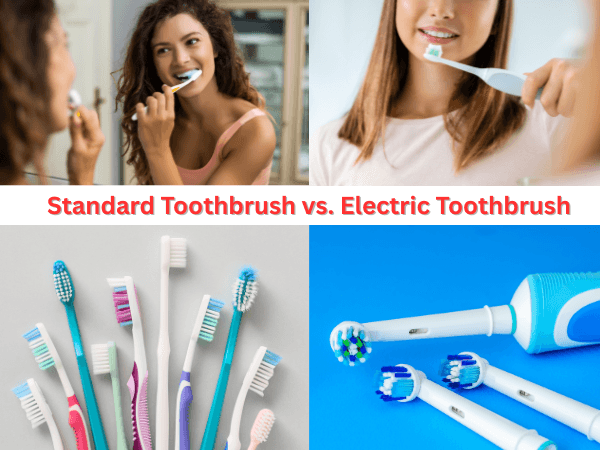
Electric toothbrush or good old-fashioned manual toothbrush? Which one actually does a better job?
It’s a surprisingly common question—and the answer isn’t quite as simple as “electric is better.”
If you are standing in the toothbrush aisle wondering whether you should spend $5 on a manual toothbrush or $50 (or more) on an electric one, there are a few things worth knowing before you make your choice.
The good news? Both can clean your teeth effectively.
The slightly more complicated answer? Research has found that powered toothbrushes can have an advantage when it comes to removing plaque and reducing gingivitis. But that doesn’t mean your manual toothbrush is failing you.
What matters most is how well, how often, and how consistently you brush.
So, Which Is Better: Electric or Manual?
If we’re talking strictly about the research, powered toothbrushes have an edge.
A Cochrane review comparing powered and manual toothbrushes found that powered toothbrushes produced greater reductions in plaque and gingivitis than manual brushing. After more than three months, the review found approximately a 21% reduction in plaque and an 11% reduction in gingivitis compared with manual brushing.
However, the researchers also noted that the long-term clinical significance of those differences wasn’t clear. And here’s the part that often gets lost in the electric-versus-manual debate:
A manual toothbrush can still be an excellent toothbrush when you use it correctly.
The American Dental Association says both manual and powered toothbrushes can effectively remove plaque and reduce gingival inflammation when used appropriately.
So let’s break down what you’re actually getting with each one.
Electric vs. Manual Toothbrush: At a Glance
| Manual Toothbrush | Electric Toothbrush | |
|---|---|---|
| Cleaning ability | Very effective with good technique | Research shows an advantage for plaque and gingivitis |
| Cost | Usually less expensive | Higher initial cost; replacement heads add ongoing cost |
| Technique | Requires you to control movement and pressure | Brush movement is provided by the device |
| Timing | You have to keep track of two minutes | Many models have built-in timers |
| Pressure | Easy to brush too hard | Some models alert you when you’re applying too much pressure |
| Dexterity | Requires more hand movement | Can be easier for people with limited dexterity |
| Travel | Simple and convenient | Requires batteries or charging |
| Replacement | Replace approximately every 3–4 months | Replace the brush head according to the manufacturer’s recommendation |
The ADA recommends using a soft-bristled toothbrush and replacing a toothbrush about every three to four months, or sooner if the bristles become frayed or worn.
Why Might an Electric Toothbrush Clean Better?
It’s not because electric toothbrushes contain some magical tooth-cleaning technology. It’s because the brush is doing some of the work for you. Depending on the type, powered toothbrushes can use oscillating, rotating, vibrating or other movements to clean the teeth. Some also include features such as:
- Two-minute timers
- Quad-pacing reminders that tell you when to move to another section of your mouth
- Pressure sensors
- Different cleaning modes
- Smaller brush heads that can make it easier to reach individual teeth
That can be particularly helpful for people who tend to rush, brush too hard, or have difficulty manipulating a manual toothbrush. The ADA specifically notes that powered toothbrushes may be useful for people with limited manual dexterity, including some older adults, people with disabilities and people wearing dental appliances such as braces.
But don’t confuse more technology with better brushing.
A $150 toothbrush isn’t automatically going to give you $150 worth of dental health. The ADA evaluates both manual and powered toothbrushes through its Seal of Acceptance program. Products that earn the seal have demonstrated safety and efficacy for their intended use. In other words, you don’t need the fanciest toothbrush in the store.
Call All Family Care Dental in Northridge for your next appointment.
Be sure to use your benefits before they expire this year.
Call (818) 709-9988
What About a Manual Toothbrush?
There’s a reason the manual toothbrush has survived for generations. It’s inexpensive, portable, easy to replace and doesn’t need to be charged. And when you use the right technique, it can do a very good job. The bigger problem isn’t necessarily the type of toothbrush sitting on your bathroom counter. It’s what you do with it. Someone who carefully brushes all surfaces of their teeth for two minutes with a manual toothbrush can have much better oral hygiene than someone who owns an expensive electric toothbrush but barely uses it.
Technique matters.
The ADA recommends brushing with fluoride toothpaste for two minutes, twice a day.
Use gentle pressure and make sure you’re reaching:
- The outside surfaces of your teeth
- The inside surfaces
- The chewing surfaces
- Along the gumline
Don’t attack your teeth like you’re scrubbing grout. Brushing harder doesn’t mean brushing better. In fact, overly aggressive brushing can contribute to gum irritation and other problems.
The Cost Question: Is an Electric Toothbrush Worth the Money?
This is where the decision becomes personal. A manual toothbrush is inexpensive and has very little ongoing cost beyond replacing it every few months. An electric toothbrush requires a larger initial investment, and you’ll continue purchasing replacement brush heads. Depending on the model, battery or charging requirements can also be a consideration.
There are inexpensive powered toothbrushes, mid-range options and premium models with features such as apps, pressure sensors and multiple cleaning modes. You don’t need to buy the most expensive model to get the potential benefits of powered brushing. If a basic electric toothbrush makes you more likely to brush for the full two minutes, use the correct amount of pressure and consistently clean all areas of your mouth, it may be money well spent. On the other hand, if you already brush thoroughly and consistently with a manual toothbrush, switching to an expensive electric model isn’t necessarily something you have to do.
Here’s the Part Your Toothbrush Can’t Do
There’s one important problem with both electric and manual toothbrushes:
Neither one cleans every surface of your teeth.
Your toothbrush bristles can’t effectively reach the tight spaces between your teeth.
That’s where floss or another interdental cleaner comes in.
The ADA recommends cleaning between your teeth once a day with floss or another interdental cleaner because brushing alone doesn’t adequately clean those areas. So if you’re spending $100 on a fancy electric toothbrush and skipping the floss…We need to talk. Your toothbrush isn’t the problem.
Should You Brush After Every Meal?
The standard recommendation is to brush with fluoride toothpaste twice a day for two minutes, and that’s the minimum routine you should aim for. If you like brushing after meals, that’s perfectly reasonable as part of your routine.
Just don’t brush immediately after consuming acidic foods or drinks.
Acid can temporarily soften tooth enamel. The ADA recommends rinsing with water instead of brushing immediately after acidic foods or beverages, and advises waiting before brushing. So if you’ve just had an acidic drink, citrus, soda or another acidic food, grab some water first and give your teeth a little time.
Electric or Manual? Here’s the Real Answer.
If you want the short version:
An electric toothbrush has a research-supported advantage for plaque removal and reducing gingivitis, but a manual toothbrush can still be highly effective when used properly.
The best toothbrush is ultimately the one you will: Use. Correctly. Consistently.
If an electric toothbrush makes brushing easier, helps you brush for the full two minutes, keeps you from brushing too hard, or simply makes you more likely to maintain your routine — great.
If you prefer a manual toothbrush and you’re brushing thoroughly twice a day, using fluoride toothpaste and cleaning between your teeth — also great.
Don’t let the toothbrush aisle make this more complicated than it needs to be.
Teeth Whitening Special
$120
Take-home whitening kit with custom trays molded to your teeth!
Offer Expires October 12th
Call today to book your appointment
Your everyday checklist is pretty simple:
✓ Brush at least twice a day for two minutes
✓ Use fluoride toothpaste
✓ Use a soft-bristled toothbrush
✓ Clean between your teeth once a day
✓ Replace your toothbrush or brush head regularly
✓ Don’t brush aggressively
✓ See your dentist regularly
And if you want to brush after meals, that’s fine too—just remember to give your teeth a little time after acidic foods and drinks.
The technology may change, but good dental care is still about people.
The right toothbrush is important, but so is having a dental team that knows your history, understands your individual needs, and helps you make informed decisions about your oral health.
Nearly 20 Years of Care — and Counting
“I have been a patient of Dr. Hackman for almost 20 years! Time really does fly. He has seen my entire family, through pregnancies (which was hard on my teeth), we have been cash and insurance patients. He has always provided the best service for us.
My kids are teenagers now and he has taken care of their cleanings, procedures and I am grateful that they have only had positive dental experiences. I have had complicated dental issues and it wasn’t until Dr. Hackman took over my care that I feel like I am in great hands.”
— Rebecca Calvin, All Family Dental Care patient
Don’t Let Your Dental Benefits Go to Waste
While we’re talking about taking care of your teeth, there’s another thing worth checking this time of year:
Have you used your dental benefits?
If your dental insurance or dental plan has a calendar-year benefit, you may have benefits available that need to be used before the end of the year.
This is a good time to check:
- Have you had your regular cleaning and exam?
- Do you have recommended dental treatment you’ve been putting off?
- Do you have remaining annual benefits?
- Do you have a deductible you’ve already met?
- Are there dental benefits that expire at the end of the year?
Don’t assume your benefits automatically roll over. Every plan is different, so check your specific plan or call your insurance company.
And if you’re not sure what you need to schedule or have questions about your dental benefits, give All Family Dental Care a call. We’d be happy to help you understand what you may need before the end of the year.
The goal isn’t to have the fanciest toothbrush in the bathroom.
It’s to have healthy teeth and gums — and a routine you can actually stick with.
This article is intended for general educational purposes and does not replace an individual dental examination or professional advice from your dentist. Call Dr. Frank Hackman at All Family Care Dental in Northridge for your next checkup. Call today for an appointment at (818) 709-9988